EISENBERG has earned customer recognition by solving challenging problems in bearing applications through its technology and services. Utilizing internationally advanced production and testing equipment, EISENBERG produces bearings characterized by low noise, high precision, high performance, and high temperature resistance. Its R&D department boasts a complete product development process, capable of developing standard bearings of various precision levels, and can also customize non-standard bearings according to customers’ specific requirements and applications. Extensive application experience, rich professional knowledge, and strict quality control make EISENBERG a leader in the bearing industry.

EISENBERG possesses advanced bearing manufacturing technology, with the aim of enabling bearings to operate better, be more reliable, and have a longer service life. Currently, EISENBERG has achieved significant research results in bearing vibration, noise, lubrication and sealing, materials and heat treatment, and reliability performance.

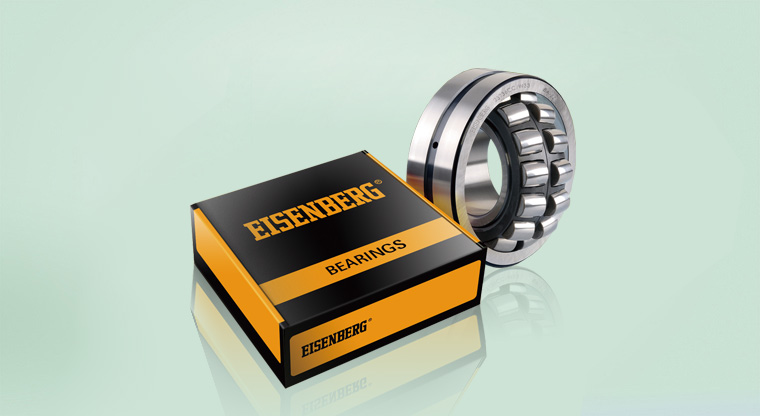
To ensure customers receive bearings that meet their requirements, EISENBERG employs the following quality control measures across all processes:

1. For all orders, record the company name and production batch number, creating a complete set of quality control documents to ensure product traceability;

2. Record all quality control points online;

3. Through internal quality management, the production management department and the quality department generate product inspection and audit reports.

What is blackening treatment? What is the purpose of blackening?

Blackening, also known as bluing, is a surface oxidation treatment method. It is mainly used for carbon steel and low alloy steel workpieces. During blackening, the workpiece is heated and oxidized in a concentrated solution of alkali and oxidizing agent, forming a thin film of magnetic iron oxide (Fe3O4) about 0.6-0.8 micrometers thick on the surface. Due to differences in the chemical composition of the workpiece and the specific operation, the oxide film can be blue-black, black, reddish-brown, brownish-red, or other colors. It has a dense structure and a certain degree of strength and toughness.

The purpose of blackening is:

(1) To prevent rust and corrosion on the surface of the workpiece;

  (2) To make the workpiece glossy, beautiful, and have a commercial surface;

(3) It helps to eliminate residual stress in the workpiece.

Fatigue failure in imported bearings is a surface manifestation of failure, primarily exhibiting the initiation, propagation, and fracture of fatigue cracks, resulting in long-term effects of alternating load failures on the metal. Imported bearings using cages made of glass fiber reinforced nylon 66 are suitable for stable operating temperatures not exceeding 120°C. When these imported bearings are oil-lubricated, additives in the oil may shorten the cage’s lifespan. At temperatures exceeding 120°C, aging lubricating oil will also shorten the cage’s lifespan. Therefore, careful monitoring and timely oil replacement are essential.
Sealed imported bearings are lubricated using specially tested high-quality lithium-based grease. This grease can withstand short-term temperatures up to 120°C. If the stable operating temperature reaches 70°C or higher, the lifespan of standard lithium-based grease will be shortened. For frequent high-temperature operation, special greases must be used, and the use of heat-resistant materials for the seals must be considered. Standard contact seals should not exceed 110°C.
If high-temperature synthetic materials are used for the seals, the release of harmful gases and fumes from these highly effective fluorinated materials at temperatures exceeding 300°C must be considered. This is especially important to note when using a welding torch to disassemble imported bearings.

The ABEC standard is a set of standards designed to classify different grades of tolerances used in the manufacturing of precision bearings. This standard was developed by the Annular Bearing Engineering Committee Council (ABEC) under the American Bearing Manufacturers Association (ABMA). The American Bearing Manufacturers Association (ABMA) was formerly known as the Lubrication Bearing Manufacturers Association.

Bearings manufactured under the ABEC standard are generally called precision bearings, numbered from 1 to 9. The higher the number, the higher the precision level used in manufacturing the bearing. This standard specifies the dimensions and running tolerances of the balls, but is unrelated to the actual performance of the bearing in use. Furthermore, it does not specify any important parameters such as materials, seals, bearing housings, lubrication, or friction tolerances.

Common misconceptions about ABEC standards: ABEC-7 bearings rotate faster and last longer than ABEC-1 bearings; ABEC-7 bearings always use only oil lubrication, not grease; resin bearing housings are better than brass, and brass is better than steel.

When choosing bearings, brand is paramount, as different manufacturers may have identical specifications, but their actual performance can vary significantly.
Other bearing numbering systems: ABEC is merely a method for defining bearing tolerance grades. Organizations for Standardization (ISO) and the German Institute for Standardization (DIN) also have similar standards for measuring bearing precision. In the ISO and DIN systems, smaller numbers indicate narrower tolerance zones, while larger numbers indicate wider tolerance zones. This is the opposite of the ABEC standard; please see the corresponding table below.

ABEC bearing standards are not universally applicable worldwide. Currently, ISO and other bearing standards organizations have their own bearing standards.

The following are examples of common bearing standard mechanisms:

China Bearing Industrial Association (CBIA)  

International Organization for Standardization (ISO)  

American Bearing Manufacturers Association (ABMA)  

Scandinavian Bearing Association (SBA)   

American National Standards Institute (ANSI)   

German National Standards Organization (DIN)  

Japanese Industrial Standards Committee (JISC)  

Japanese Standards Association (JSA)  

Standards Engineering Society

Lubrication has a crucial impact on the operation and lifespan of bearings. Here is a brief introduction to the general principles of selecting lubricating grease. Lubricating grease is made of base oil, thickener, and additives. Different types of grease, and even different brands of the same type, have significantly different performance characteristics and allowable rotational limits; careful consideration is essential when selecting one. The performance of lubricating grease is primarily determined by the base oil. Generally, low-viscosity base oils are suitable for low temperatures and high speeds; high-viscosity base oils are suitable for high temperatures and high loads. The thickener also affects lubrication performance; the water resistance of the thickener determines the water resistance of the grease. In principle, greases from different brands should not be mixed. Furthermore, even greases with the same thickener can have adverse effects due to different additives.

The common misconception is that the more grease you apply when lubricating bearings, the better. Excessive grease in the bearing and bearing housing will cause over-agitation, resulting in extremely high temperatures.

The bearing surface is coated with anti-rust oil. You must carefully clean it with clean gasoline or kerosene, and then apply clean, high-quality or high-speed, high-temperature lubricating grease before installation and use. Cleanliness has a significant impact on bearing life and vibration noise. However, we would like to specifically remind you that fully enclosed bearings do not require cleaning or lubrication.

1. Wear and deformation of the ball bearings.

2. Poor lubrication.

3. Foreign objects inside the bearing.

4. Damaged or deformed ball bearing support.

5. Thermal expansion of the bearing.

6. Shaft wear.

7. Wear of the bearing housing.

8. Excessive misalignment during installation.

Not all bearings require the smallest possible operating clearance; you must select the appropriate clearance based on the conditions. In the national standard 4604-93, the radial clearance of rolling bearings is divided into five groups: group 2, group 0, group 3, group 4, and group 5, with clearance values ​​increasing sequentially. Group 0 represents the standard clearance. The basic radial clearance group is suitable for general operating conditions, normal temperatures, and commonly used interference fits. Bearings operating under special conditions such as high temperature, high speed, low noise, and low friction should preferably have a larger radial clearance. Smaller radial clearances are preferable for precision spindles and machine tool spindle bearings. For roller bearings, a small amount of operating clearance can be maintained. Furthermore, for separable bearings, clearance is irrelevant. Finally, the operating clearance of the bearing after installation should be smaller than the original clearance before installation because the bearing must withstand a certain load during rotation, and there is also the elastic deformation caused by the bearing fit and load.